Enhancing Hybrid Bus Fleet Performance with Modern Energy Storage Technology
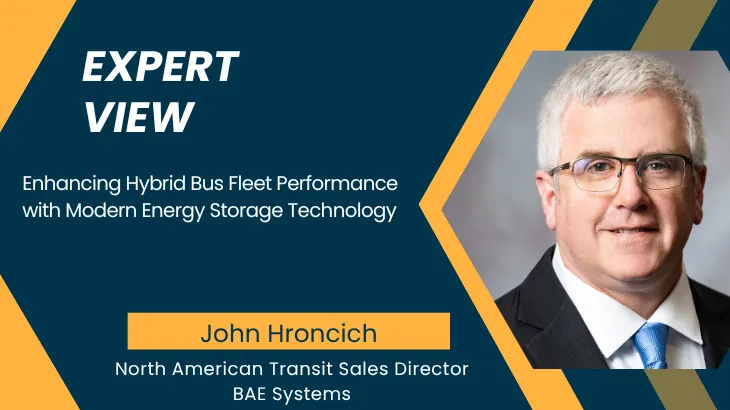 Image credit: BAE Systems
BAE Systems has developed electrification technology for more than three decades. In this Q&A, North American Transit Sales Director John Hroncich explains how the company’s latest Series-E hybrid bus drivetrain – the ESS-3G-1K energy storage system - helps transit agencies optimize the total cost of ownership and operational performance of their hybrid-electric bus fleets.
Q: Tell us about your role at BAE Systems and the company’s offerings for the transit industry.
As the Director of North American Transit Sales, I focus on providing electrified powertrain solutions for transit buses. I have spent the last 15 years helping agencies commercialize sustainable transportation technology to reduce emissions and improve efficiency.
Q: As one of the pioneers of electric propulsion, BAE Systems has been advancing electrification technology for more than three decades. How has the company's approach to electrification evolved over time to meet transit agency needs?
Our company began developing its first hybrid electric propulsion system in 1996, and the technology entered passenger service in 1998. Today, more than 19,000 BAE Systems propulsion systems are operating around the world and have collectively traveled more than five billion miles.
We have a continuous approach to improving our electrification technology. Our first-generation architecture laid the groundwork for our hybrid-electric platform. Nearly a decade later, the second generation introduced more advanced electronics that supported battery-electric and hydrogen fuel-cell vehicles, along with more sophisticated hybrid functions. Today, BAE Systems third-generation power system is modular, scalable and versatile, providing the foundations for our current propulsion offerings.
Each generation has become more efficient and more capable, with the same core design method: flexible technology that can adapt to different vehicles and customer needs. This modular approach allows power electronics, battery management, diagnostics, DC-DC power conversion, communications gateways and system controls to be configured to specific requirements without redesigning the entire propulsion system.
Q: BAE Systems offers two electric drive solutions for hybrid electric fleets - the Series-E and the Series-ER. What distinguishes them? How does an agency decide which one is suitable for its needs?
The Series-E and Series-ER are both electric drive systems designed to help transit agencies improve the efficiency and performance of their hybrid-electric fleets. Series-E is a cost-effective, proven, efficient hybrid solution for agencies looking to lower fuel use and emissions while maintaining the flexibility of a conventional hybrid. Series-ER incorporates a larger energy storage capability, enabling longer periods of zero-emission operation in designated areas, such as downtown areas, depots and other locations where agencies want to reduce noise and tailpipe emissions.
The right choice depends on an agency’s routes, duty cycles, emissions objectives and charging or operational requirements. Agencies with planned zero-emission zones may find Series-ER’s extended electric operation especially valuable, while those seeking long-life hybrid performance across a broad range of service conditions may prefer Series-E.
Q: What is the BAE Systems ESS-3G-1K energy storage unit?
The ESS-3G-1K is part of our Series-E hybrid bus solution. It is an energy storage system that utilizes long-life ultracapacitor technology rather than traditional batteries. We use this design specifically for its durability, rapid charge/discharge capabilities, and simplified thermal management system.
Q: Why is energy storage critical to a hybrid-electric bus fleet?
The energy storage system is the hub that captures, stores, and delivers power. It recovers braking energy, supports acceleration, and reduces the workload on the engine. When this system is reliable, agencies realize the primary benefits of hybrid-electric investment, specifically, better fuel efficiency, lower emissions, and dependable service.
Q: What specific challenge does the ESS-3G-1K address?
Many agencies have hybrid-electric buses that still have years of useful service remaining, but the energy storage systems are aging. This often leads to declining performance, higher maintenance, or difficulty sourcing obsolete parts. The ESS-3G-1K provides a life-of-the-bus solution eliminating a costly midlife replacement.
Q: How does this impact the total cost of ownership (TCO)?
TCO includes everything beyond the purchase price: maintenance, energy use, downtime, and the total productive lifespan of the vehicle. By having a true life-of-the-bus energy storage system, transit fleets can avoid a significant overhaul cost and focus on getting the benefits (e.g. better fuel economy) of their hybrid system.
Q: Why upgrade a hybrid bus when the industry is shifting toward fully electric?
Fleet transitions are complex and do not happen overnight. Agencies must balance infrastructure readiness, funding, and route requirements. Hybrid-electric buses remain a practical tool during this transition. Upgrading existing vehicles provides flexibility and allows agencies to extract full value from current assets while they develop long-term strategies for battery-electric or other zero-emission technologies.
Q: How does BAE Systems’ experience factor into this solution?
Having developed electric propulsion for transit for three decades, we understand how these components behave in real-world operating environments. Our solutions aren't designed as isolated parts, but as integrated components that must perform reliably within the broader propulsion system and the daily demands of transit service.
Q: What's your message for transit agencies that are under pressure to meet zero-emission mandates but are constrained by rising infrastructure costs, range limitations, and a lack of workforce readiness?
Transit agencies do not have to choose between meeting zero-emission goals and maintaining reliable, affordable service. A practical transition starts with matching propulsion technology to real-world routes, operating conditions and available infrastructure, while using hybrid and other flexible solutions to reduce emissions now. With the right technology roadmap and support, BAE Systems helps agencies move confidently toward a zero-emission future on a timeline that works for their riders, workforce and budgets. If you would like to explore how BAE Systems’ energy storage system can optimize the total cost of ownership and improve operational performance of your hybrid-electric bus fleets, please reach out to john.hroncich@baesystems.us or via the link on this web page. We look forward to hearing from you!