Study lays groundwork for more coordinated regional transit service under NITA
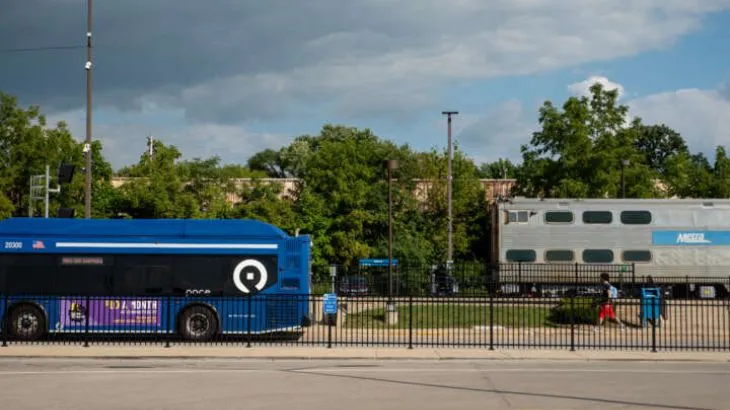 Image credit: RTA
A new regional transit service coordination study will help bridge between current service planning practices and the first Northern Illinois Transit Authority (NITA)-led regional service planning process, which will begin late next year. NITA will adopt regional service standards and transit propensity thresholds by the end of 2027, followed by its first regionwide service plan in 2028 for implementation in the 2029 budget year. The goal is to provide riders with more reliable connections and a transit network that functions more effectively across agency boundaries.
RTA commissioned the study with the goal of benchmarking and improving interagency transfers before NITA’s service planning requirements kick in. The study analyzed more than 140,000 scheduled connections at more than 60 locations served by CTA, Metra, and Pace, identifying opportunities to improve an acceptable transfer window of 3–15 minutes. Presented to the RTA Board of Directors in July, the study establishes a baseline for improving interagency connections and identifies steps NITA can take to better coordinate schedules, service planning, data, and public engagement. The study offers recommendations for how NITA can improve regional coordination in service planning even before transit propensity thresholds and service standards are adopted in late 2027. These recommendations include:
- Evaluate how proposed major schedule changes would affect connections with other transit agencies.
- Conduct joint service coordination and network planning reviews in key areas where CTA, Metra, and Pace connect.
- Give NITA responsibility for coordinating regional stakeholder engagement and determining when to partner with CTA, Metra, and/or Pace.
- Centralize customer research so surveys and other feedback efforts reflect the regional transit experience.
- Coordinate public engagement activities around CTA, Metra, and Pace network plans and begin presenting them as part of a unified regional effort.
- Connect or consolidate data systems so planners can more easily access schedules, ridership, transfer, and performance information from across the region.
The NITA Act established three major components of the future regional service planning process.
- Transit propensity - NITA will create a regional transit propensity analysis to determine where different types of transit service are justified. The analysis must consider factors including population and employment density, low-income and disabled populations, zero-car households, intersection density, and the presence of sidewalks. NITA will establish thresholds showing where different types of transit service may be appropriate.
- Regional Service Standards - Service standards will define the appropriate characteristics for each type of transit service. These can include mode and vehicle type, frequency and hours of service, stop spacing and coverage, vehicle and stop amenities, network connectivity, and route directness and deviation. The standards will recognize that different services have different purposes. For example, the appropriate service level for a coverage-focused rural bus route will differ from the standard for a high-ridership rail line.
- Regionwide service plan - NITA will lead an annual planning process that produces a unified plan for CTA, Metra, and Pace service. Each plan will cover the next one to three years and must comply with the regional service standards. The plan will include the location, frequency, days, and hours of service; explanations for proposed changes; funding assumptions; and requirements related to reliability, cleanliness, safety, fares, customer information, branding, and coordination.
After initial adoption in December of 2027, transit propensity thresholds and service standards will be incorporated into the agency strategic plan and updated on a five-year cycle. The timeline for this new planning process under NITA is as follows:
- December 15, 2027: NITA will issue a request for proposed service plans from CTA, Metra, and Pace
- December 31, 2027: NITA will adopt transit propensity thresholds and regional service standards
- March 31, 2028: Service Boards will present preliminary service proposals
- April 30, 2028: Service Boards will submit proposed service plans to NITA
- December 31, 2028: The NITA Board must adopt a regionwide service plan
- 2029: The first budget year implementing the regionwide service plan
The NITA Act took effect on June 1, 2026, bringing many reforms to the structure of public transit in northeastern Illinois. RTA will officially transition to NITA on September 1, and the new agency will have expanded responsibility for regional transit service planning.
Source: RTA